
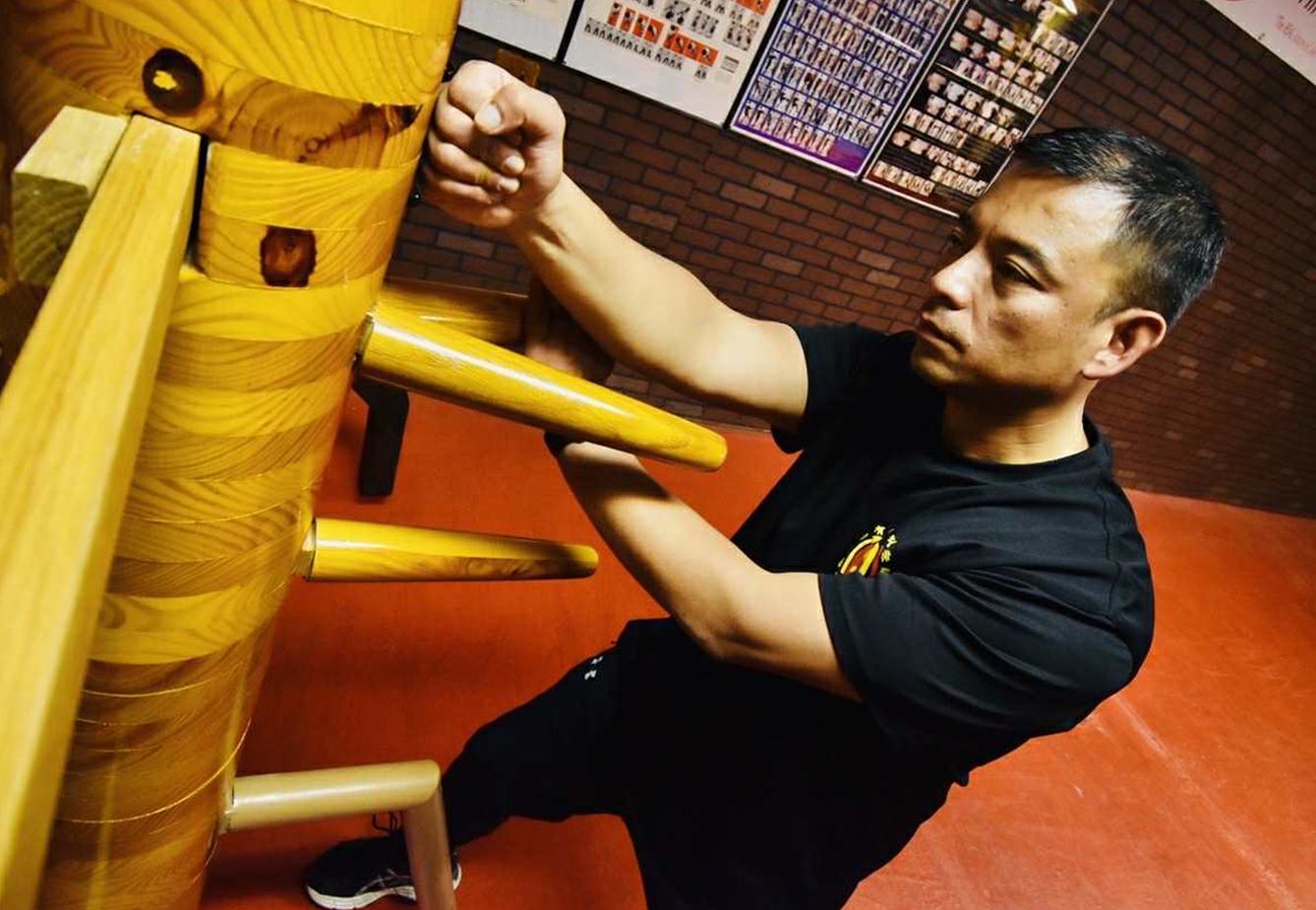
The Totality of Jun Fan Jeet Kune Do
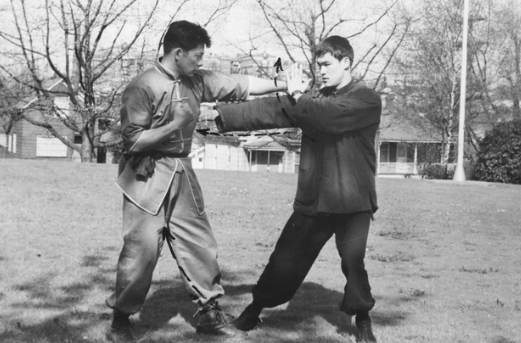
Taky Kimura, left, trains with Bruce Lee (Courtesy of Abe Santos)
Through the years I have heard the term … Jun Fan Jeet Kune Do. In this article, we will discuss my view of the literal meaning of Jun Fan Jeet Kune Do, its creation and evolution, the difference between Jeet Kune Do and Jun Fan Gung Fu, and the true meaning of Jun Fan Jeet Kune Do based on my own experiences dating back to when I first met Sifu Taky Kimura back in 1983. Sifu Taky has always told me that he understood the totality of Bruce Lee’s art and where he wanted to go with it.
On January 10, 1996, many of the original students of Bruce Lee would all meet and gather in Seattle for a historic event. The Jun Fan Jeet Kune Do Nucleus was created to preserve the original art of Jun Fan Gung Fu or Jeet Kune Do. I was lucky enough and honored to attend this first meeting. It was held in the previous location of the Jun Fan Gung Fu Institute of Seattle, in the basement of the Shop Rite, a grocery store owned by Sifu Taky Kimura. I was in awe of seeing so many of the original students of Bruce Lee in the same place. It was truly an honor to be there. Before the Nucleus was formed, Bruce Lee’s art was called either Jun Fan Gung Fu or Jeet Kune Do. While some people choose to use Jeet Kune Do and Jun Fan Gung Fu interchangeably, it was not until after the Jun Fan Jeet Kune Do Nucleus was formed that Bruce Lee’s art would be called Jun Fan Jeet Kune Do.
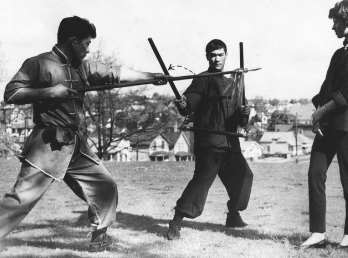
Taky Kimura, Bruce Lee and Linda Lee (Courtesy of Abe Santos)
But what does Jun Fan Jeet Kune Do mean? Jun Fan means Bruce Lee and Jeet Kune Do literally means the Way of the Intercepting Fist — Bruce Lee’s Way of the Intercepting Fist. While we know the literal terms, what does it really mean? Through the years, I have been exposed to many aspects of Jun Fan Jeet Kune Do. At the Institute, we were not concerned with anything that was happening in the Jun Fan or Jeet Kune Do world outside of Seattle. This is how Sifu Taky preferred it. On January of 1996, Linda, Shannon, John Little, and many of the original and some of the second-generation students all agreed that in order to preserve the integrity of the art, there needed to be a way to implement a uniform curriculum and a way of teaching it. While the personal expression of Jun Fan Gung Fu varied depending on the individual and the teaching methods of his or her instructor, the foundation of the art should be uniformly taught to all students regardless of who their instructor was.
Bob Wall, Taky Kimura and Abe Santos
So, the collaboration began with the sharing of information and curriculums between the members of the Jun Fan Jeet Kune Do Nucleus. I even remember a time when Ted Wong and Richard Bustillo came to Seattle just to train with us at the Institute. As a result of this collaboration, there would be a multitude of seminars held in various cities including San Francisco, Los Angeles, Seattle, Las Vegas and Amsterdam.
I would like to provide some background information for the readers who may not know who Sifu Taky Kimura is. Sifu Taky is the man Bruce Lee considered his best friend in the entire world. He was the best man at his wedding, the assistant instructor at his first school, the Jun Fan Gung Fu Institute of Seattle, and his highest-ranking and most senior student in Jeet Kune Do. Bruce Lee trusted Sifu Taky completely. About five years ago, Bob Wall, who co-starred with Bruce Lee in many of his films, said to Sifu Taky, “Before I ever met you (Taky), he (Bruce) was always talking about his best friend ‘Tacky’ (this is how Bob pronounced Taky). He loved Taky. ‘What the hell is a Tacky?’ Bob asked Bruce. He loved this man.” Bob Wall summed up this special relationship during a conversation that Sifu Taky and I had with him five years ago.
Even after Bruce moved to California, he always kept in contact with Sifu Taky via phone calls and letters. A Bruce Lee historian once told me that Bruce Lee wrote more letters to Sifu Taky than anyone else alive. Now, imagine how much time it would take to write a letter, put it in an envelope, stamp it, and then drive to the post office to mail it. That’s a lot more work than sending an email. He would always keep Sifu Taky informed about what he was doing and teaching while he was in Oakland and then in Los Angeles. When Bruce visited Seattle once or twice a year to visit Linda’s mom, he took the time to teach Sifu Taky the changes he made with respect to the art. Sifu Taky always told me that he understood the totality of Bruce’s art — that is to say, he understood where Bruce wanted to take Jun Fan Gung Fu and Jeet Kune Do and how he wanted to share it with the world. Sifu Taky always told me that he knew this because Bruce always kept in contact with him and never held anything back from him.
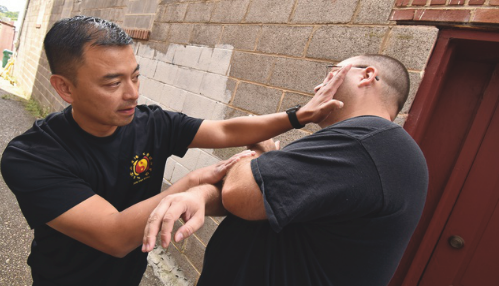 During my time at the Institute while we were in the basement of the grocery store, it was entirely private and non-profit. There were no dues charged and, since it was private, potential members could join by invitation only. At times, there would be a waiting list of one to two years long. Because of this, Sifu Taky was able to keep the art pure. He taught his students the way Bruce taught him. He never deviated away or taught his students something other than what Bruce taught him.
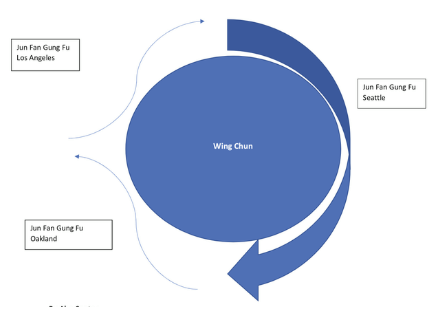
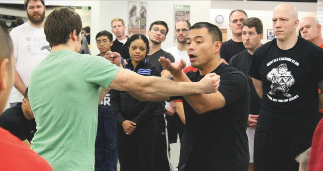 Bruce Lee took five years of Wing Chun in Hong Kong before moving to Seattle in 1959. So, it is not surprising that the very core of the original Jun Fan curriculum in Seattle was Wing Chun. But it was a modified version of Wing Chun that would be the original Jun Fan Gung Fu curriculum. So, if you think of a circle, the center is Wing Chun, with the original Jun Fan Gung Fu in Seattle completing ½ of the circle.
After Bruce Lee moved to Oakland in late 1964, he opened up his second school, the Jun Fan Gung Fu Institute of Oakland with James Lee. James Lee would be his second assistant instructor. The martial arts community in San Francisco’s Chinatown were not happy with Bruce teaching non-Chinese students. They were so angry that they challenged Bruce to a fight with Wong Jack Man. If Bruce were to lose, he would have to close the school. Of course, Bruce won. While this was unfortunate, it made Bruce realize the importance of fitness conditioning and the limitations of his current art. For this, he decided to modify his original curriculum. This new curriculum was less structured and incorporated such things as the striking from boxing and the footwork from fencing for mobility. So, if you think of that circle again, you can think of this modified Jun Fan Gung Fu curriculum in Oakland completing another ¼ of the circle.
It is not that (Lee) felt that some things like Chi Sao were NO LONGER IMPORTANT, but that it wasn’t important at this time and with these particular students
In 1967, Bruce Lee moved to L.A. to pursue an acting career in Hollywood. Even though his time with The Green Hornet was short-lived, he was able to start his third school, the Jun Fan Gung Fu Institute of Los Angeles, with Dan Inosanto. Dan Inosanto would be his third assistant instructor and the last person to be personally certified by Bruce Lee to teach his art. 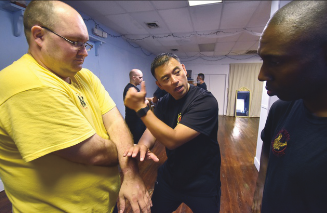 It was at this time that he began making guest appearances on TV shows and giving private lessons to celebrities in Hollywood. During this time, he began to focus more on mobility, boxing techniques, and equipment training and less on some things such as Chi Sao. A lot of his students in L.A. were taller and bigger than he was, so Chi Sao wasn’t as practical for opponents of this size. As a result, he did not focus on this in his curriculum in L.A. It is not that he felt that some things like Chi Sao were no longer important, but that it wasn’t important at this time and with these particular students. While Chi Sao and other original aspects were still essential and the core of his art, he wanted to practice and work on other techniques that could offset or supplement the lessons he taught in Seattle and Oakland. Even though he was acting more, he was continuously adapting and implementing changes to his original Jun Fan Gung Fu. It was after this point that Jeet Kune Do came to life.
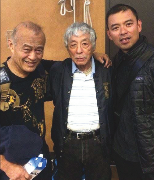
Dan Inosanto, Taky Kimura and Abe Santos
As an instructor, he was notorious for focusing on the individual. For this, while he may have taught one student more of this, he would teach another student more of something else depending on his weaknesses and strengths. For this, he placed less emphasis on the basics and more emphasis on individualized training plans. Between acting and private lessons, Bruce had less and less time to teach at the Institute in L.A., so he had to be more efficient with what he did teach when he did. So, if you think of that circle again, his experience and changes he made in L.A. — or what we now know as Jeet Kune Do — would complete the last ¼ of the circle.
During my time with Sifu Taky, he would always tell me he understood the totality of Bruce’s art. What I think he meant was that he understood the core of Jun Fan Gung Fu and the evolution that took place during Bruce’s time in Oakland and then in Los Angeles. While Sifu Taky understood why Bruce had to tailor his teachings to each of his respective students, he understood the importance of keeping Jun Fan Gung Fu original and pure. As this was still the very foundation and core of Bruce’s art. For this, Sifu Taky would teach his students the Bruce Lee way.
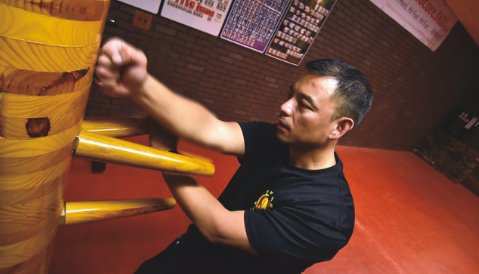 Jun Fan Jeet Kune Do is Bruce Lee’s Way of the Intercepting Fist. A key aspect of Wing Chun is intercepting the opponent’s strike, similar to the simultaneous block and strike taught in Wing Chun. Trapping is also another key aspect. You become more effective at trapping after practicing hours and hours of Chi Sao. Chi Sao improves one’s sensitivity, technique, and economy of motion. But it does have its limitations, especially with taller opponents as Bruce experienced with Lou Alcindor and Kareem Abdul-Jabbar. For this, in addition to near-perfect technique, one must implement footwork as well. In Enter the Dragon, Bruce Lee showcases some various movements that make up Jun Fan Jeet Kune Do such as when he did Pak Sao against Bob Wall. Bruce created Jeet Kune Do with the core being the Jun Fan Gung Fu based on the foundation of Wing Chun, and then modified it and supplemented it with other styles such as boxing, fencing, judo, and savate. Bruce Lee sometimes referred to his art as “the art of no art.” But we now know that the very name of his art has its roots in Wing Chun’s concept of intercepting your opponent’s strike.
While Sifu Taky understood why Bruce had to tailor his teachings to each of his respective students, he understood the importance of keeping Jun Fan Gung Fu original and pure.
In summary, what was taught in Seattle was and still is the foundation and core of the Jun Fan Jeet Kune Do that Bruce Lee taught in Seattle, Oakland, and L.A. He only added to those core principles after his experience with various types of opponents. You cannot fully understand and express Jeet Kune Do unless you first learn the Jun Fan Gung Fu. This will separate you from learning just the surface of a movement in Jeet Kune Do when you understand its roots and purpose. This is the core and foundation of Jun Fan Jeet Kune Do. You cannot have Jeet Kune Do without the Jun Fan Gung Fu as they are one and the same. This is the totality of Bruce Lee’s art of Jun Fan Jeet Kune Do! This is when the circle has been completed!
Share this article
Follow us
Related Posts
STAY IN THE LOOP
Subscribe to our free newsletter.
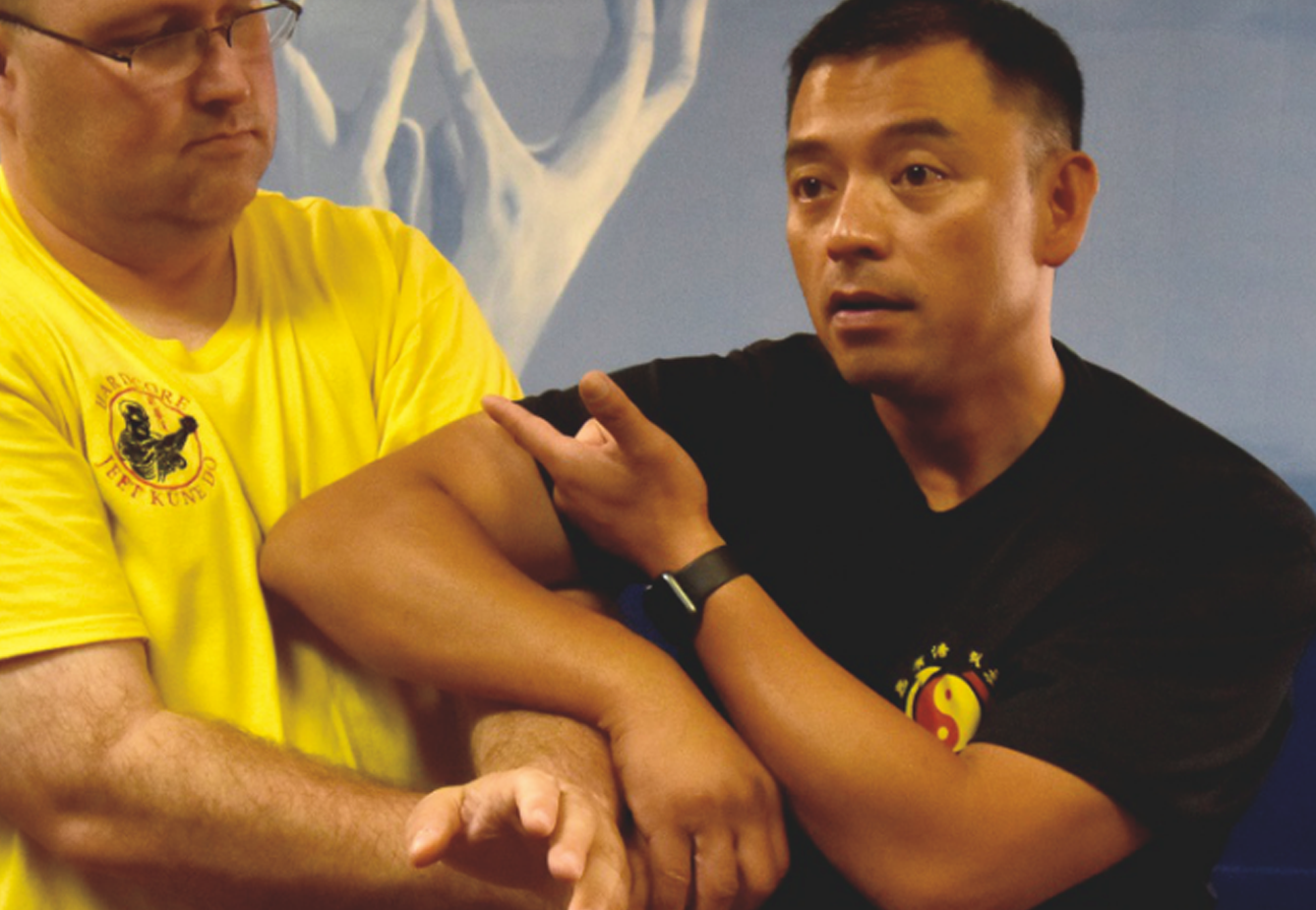
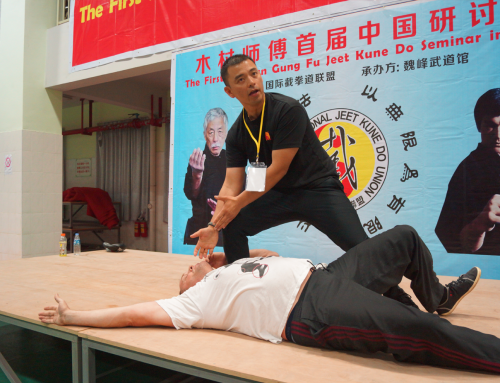
What is trapping? Trapping is to hold, “something tightly, usually a body part so it cannot move or be freed.” Now, what is Trapping with Feeling? And how is trapping with feeling different from just trapping? Before we can answer that, we need to know what trapping is from the perspective of Jun Fan Jeet
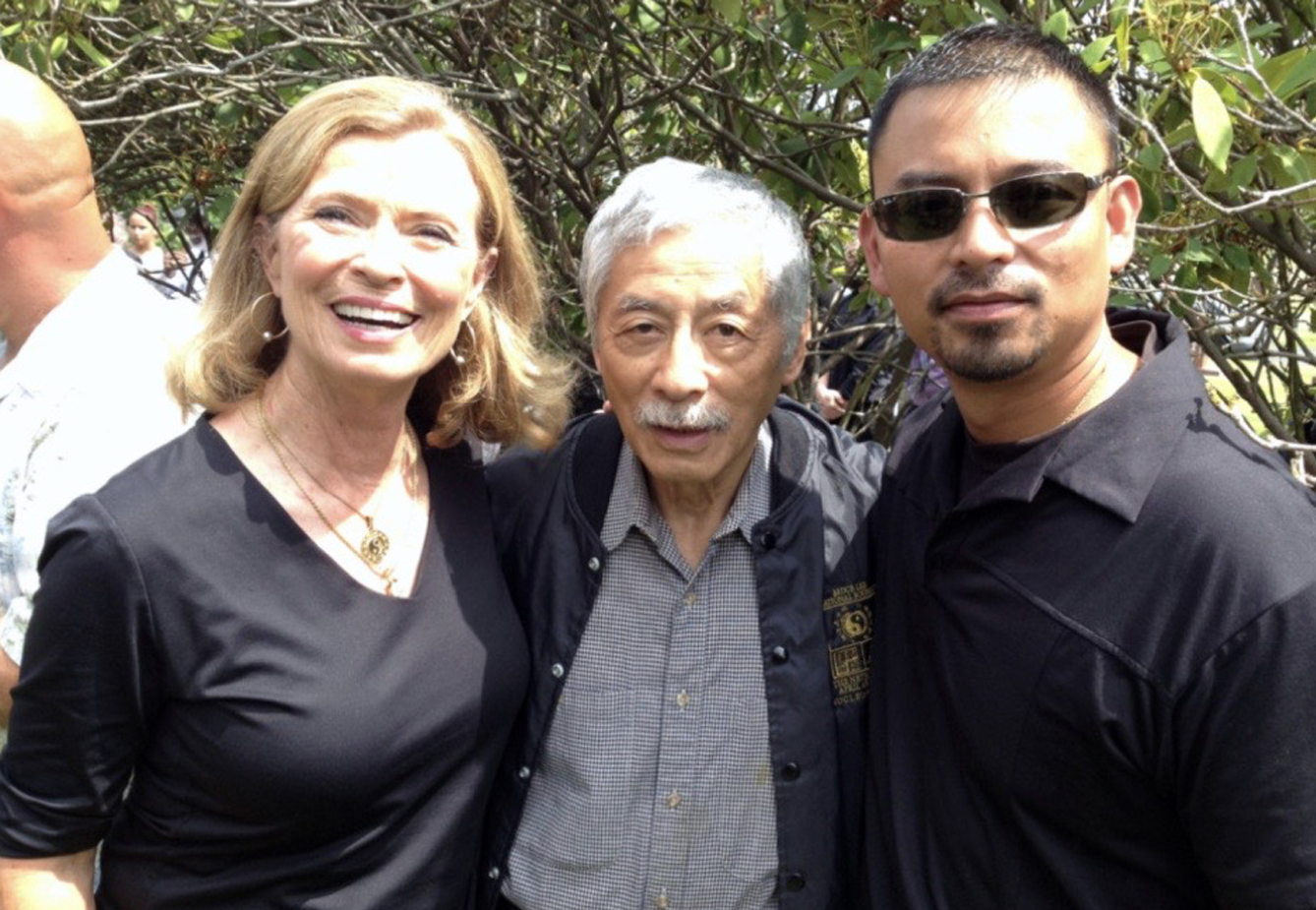
There’s no better source for the Totality of Jeet Kune Do than Bruce Lee’s best friend and highest-ranking student, Sifu Taky Kimura. In this interview with Taky’s protégé, Sifu Abe Santos, learn the true history of Jeet Kune Do. What do you think is the biggest misconception about what you teach?The main misconception is that
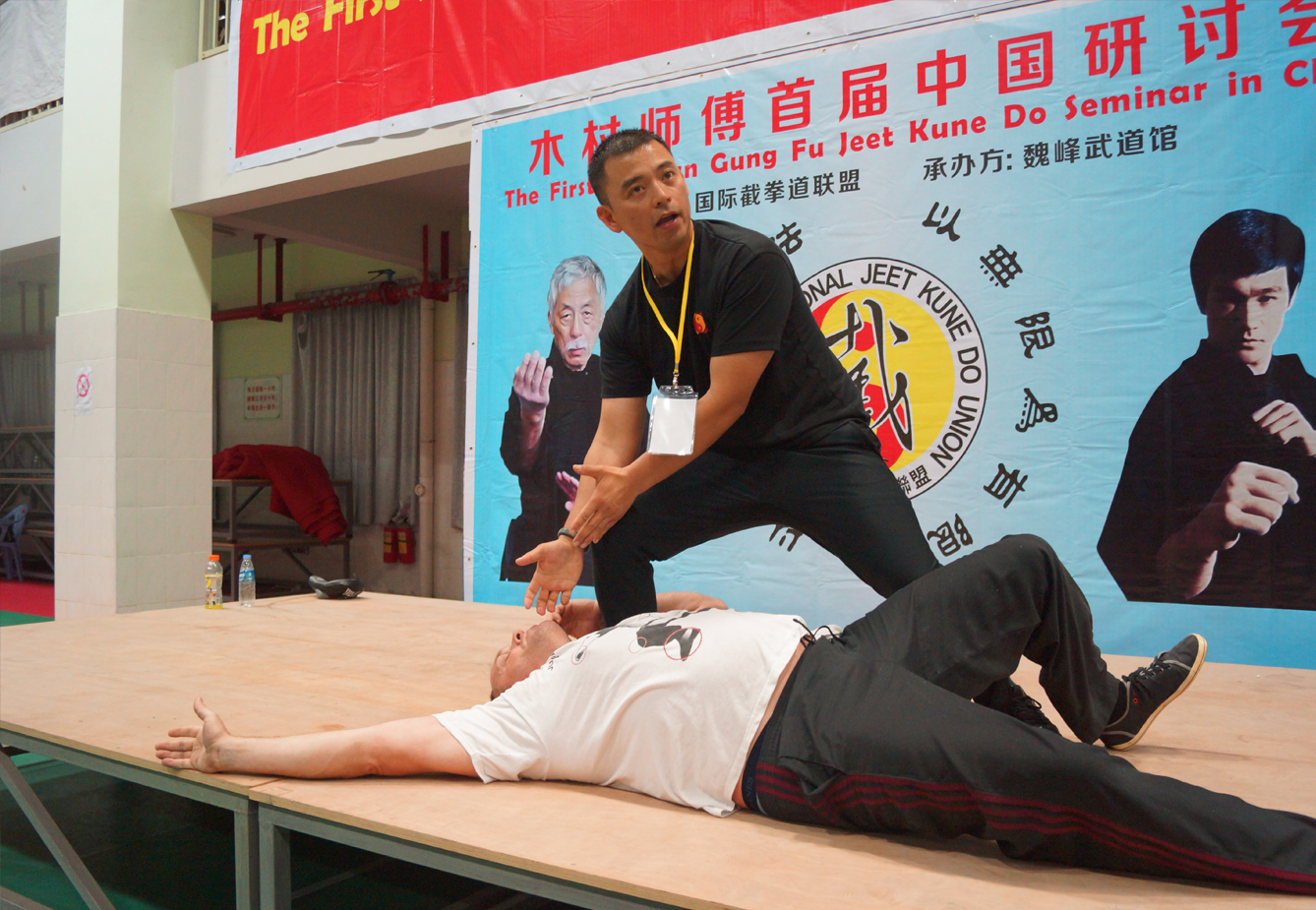
Today we’d like to introduce you to Abe Santos. Thanks for sharing your story with us Abe. So, let’s start at the beginning and we can move on from there. I am a senior instructor at the Jun Fan Gung Fu Institute of Seattle. I have been a student and friend of Sifu Taky Kimura